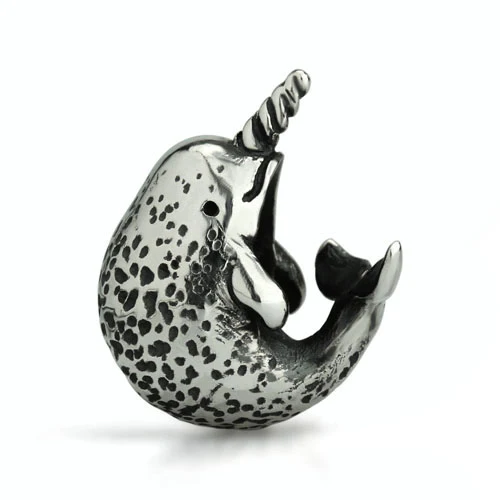
Saul The Narwhal (Retired)
The tusk is an innervated sensory organ with millions of patent nerve endings connecting seawater stimuli in the external ocean environment with the brain. The rubbing of tusks together which males engage in is now hypothesized to communicate information about the water each has traveled through rather than to represent the previously assumed male-to-male rivalry. Narwhals have only occasionally been observed using the tusk for aggressive behavior.
It lives in the Arctic waters around Greenland, Canada, and Russia.
Narwhals communicate with clicks, whistles, and knocks.
More Images
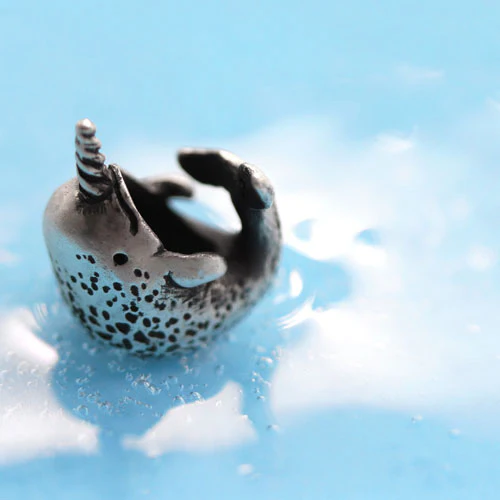
Saul The Narwhal (Retired)
The tusk is an innervated sensory organ with millions of patent nerve endings connecting seawater stimuli in the external ocean environment with the brain. The rubbing of tusks together which males engage in is now hypothesized to communicate information about the water each has traveled through rather than to represent the previously assumed male-to-male rivalry. Narwhals have only occasionally been observed using the tusk for aggressive behavior.
It lives in the Arctic waters around Greenland, Canada, and Russia.
Narwhals communicate with clicks, whistles, and knocks.
Product Information
Product Information
Shipping & Returns
Shipping & Returns
Description
The tusk is an innervated sensory organ with millions of patent nerve endings connecting seawater stimuli in the external ocean environment with the brain. The rubbing of tusks together which males engage in is now hypothesized to communicate information about the water each has traveled through rather than to represent the previously assumed male-to-male rivalry. Narwhals have only occasionally been observed using the tusk for aggressive behavior.
It lives in the Arctic waters around Greenland, Canada, and Russia.
Narwhals communicate with clicks, whistles, and knocks.